Program Overview & Strategy
(Shahpur Bazar Waste Management Program)
Supported by ABT- Manage feed future Bangladesh neuration activities (Market waste management program)
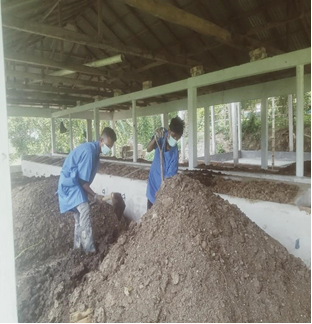
RUSTIC successfully unveils its new compost production plant in July 2024, located in the Shahpur Bazar, Dumuria in Khulna. RUSTIC compost Plant , is incorporated as a private limited company under the laws of Bangladesh. The company's headquarters and production facility will be located strategically in the Khulna district to ensure efficient distribution across the targeted geographic coverage area. It plans to lead in high-quality, eco-friendly compost production in Khulna, Bagerhat, and Shatkhira districts of Khulna Division. RUSTIC will operate with a commitment to sustainability, innovation, and customer satisfaction.
This new facility harnesses local market waste to produce premium compost, aims to boost soil fertility and sustainable agriculture while, setting a new standard for waste management and sustainability that offers income generating activities to youth and underprivileged group of people of this area and cost-effective solutions for the farmers.
Purpose and Need
RUSTIC compost Plant. helps with the pressing challenge of efficient waste management and fertilization solutions for soil. This Will be done by converting the organic waste into a valuable compost. The project decreases landfill use and improves soil health, an essential for sustainable agriculture in the region.
a. Decrease Waste: Turn trash at local
markets into rich compost instead of waste destined for landfill. High population density in the Asian countries leads to enormous solid waste, and markets are always abuzz with thousands of people engaged in business. Problems with garbage disposal faced by cities such as Dhaka, Khulna which produce thousands of tons waste daily. Failure to manage this waste properly can create pollution and lead to landfills that degrade the local ecosystems as well as contribute greenhouse gas emissions, which causes climate change.
b. Sustainable Agriculture: Enhancing soil fertility and agricultural productivity with nutrient rich compost. Farmers in these regions often rely on chemical fertilizers, which can harm the environment by leaching into water sources and reducing soil health. By providing high-quality, affordable organic compost, the project supports a shift toward eco-friendly farming practices. Organic compost enriches the soil naturally, reducing the need for synthetic fertilizers, and helps improve soil structure and water retention. This approach not only boosts agricultural productivity but also minimizes environmental impact, fostering a healthier ecosystem.
c. Generate income for local communities: by blending waste collection and compost making in the source place itself along with economic growth. Unemployment in a great concern for the current generation. They must be involved in income generating activities.
This compost processing unit involves many locals in income generating activities.
Key Objectives-
i. Organic Waste Utilization: The project will set up a mechanism to effectively turn market-sourced organic waste into premium compost. Some crucial actions are involved in this process:
• Collection and Segregation: separating organic waste from non-organic materials by using an organized method to gather and sort it from market vendors.
• Processing: converting organic waste into nutrient-rich compost by using composting processes. Established composting facilities with the required infrastructure and monitoring systems is needed for this.
• Quality Control: Ensuring through routine testing and quality assurance procedures that the compost produced satisfies agricultural and environmental criteria.
• Distribution: Providing the compost to local farmers and agricultural enterprises, promoting its use as a natural fertilizer. This will help reduce the reliance on synthetic fertilizers, which can contribute to soil degradation and water pollution.
ii. Waste Reduction: The project will focus on significantly decreasing the volume of waste sent to landfills and promoting recycling through several strategic actions:
• Waste Segregation and Collection: Developing an effective waste segregation system at the source, where market waste is sorted into categories such as organic, recyclable, and non-recyclable materials. This will involve providing appropriate bins and training for market vendors.
• Recycling Initiatives: Establishing partnerships with local recycling facilities to ensure that recyclable materials are properly processed and repurposed. This may include materials like plastics, metals, and glass.
• Public Education and Engagement: Launching campaigns to educate market vendors, consumers, and the broader community about the importance of waste reduction and recycling. This will involve workshops, informational materials, and community events.
• Monitoring and Evaluation: Implementing a system to track waste generation, segregation rates, and recycling performance. This will help identify areas for improvement and measure the effectiveness of waste reduction strategies.
Through converting organic market waste into compost, the project will not only help reduce greenhouse gas emissions but also provide a sustainable alternative to chemical fertilizers, supporting eco-friendly agricultural practices. Addressing these areas RUSTIC compost Plant aims to minimize the environmental impact of waste, reduce the burden on landfills, and promote a circular economy where materials are reused and recycled, ultimately contributing to a more sustainable and cleaner environment.
Expected Outcomes
• Environmental Impact: Significant reduction in waste and improved soil health, fostering sustainable agricultural practices in this area.
• Community Empowerment: Enhanced livelihoods through new job opportunities and economic activities related to compost production and distribution.
• Agricultural Sustainability: Increased crop yields and reduced reliance on chemical fertilizers, promoting long-term food security.
This initiative paves the way for a greener future and also builds a resilient local economy, proving that sustainability and community development go hand in hand. RUSTIC compost Plant aims to transform waste management and agricultural practices in the Khulna Division. With a strong commitment to maintain high quality, standers and prioritized customer satisfaction. RUSTIC compost Plant is poised to make a significant contribution to the agricultural sector in Khulna Division by providing innovative, sustainable solutions to farmers' fertilizer needs. With a focus on product quality, customer satisfaction, and environmental stewardship, RUSTIC is well positioned for success and growth in the dynamic organic fertilizer market of Bangladesh.
Program Highlights
Thematic Category
Organization Building
Geographical Coverage
Khulna, Bagerhat, Satkhira & Coastal Delta
Statutory Governance
NGO Affairs Bureau Reg. 1949
Program Framework
UN SDGs 1, 6, 13 & 14 Aligned
Support This Program
Join hands with RUSTIC as a funding partner, research collaborator, or technical contributor to scale impact.
Partner With Us →